
Home / Mechanical Torque Equalization
Mechanical Torque Equalization
One input. Multiple bolts. A more even load.
BridgeFlow MTE™ automatically directs torque to the bolt with the least resistance. As the torque required to turn that bolt rises, the system automatically redirects torque to the next loosest bolt.
Make tightening a coordinated process.
Conventional sequential tightening addresses bolts one at a time. With a single drive input, MTE automatically directs torque to the bolt with the least resistance, then shifts to the next loosest bolt as tightening resistance increases. This process continues automatically as the bolts tighten.
The goal is a more consistent, efficient tightening process with less repeated tool repositioning. Final joint performance still depends on the flange, gasket, fasteners, lubrication and approved assembly procedure.
Review your flange application →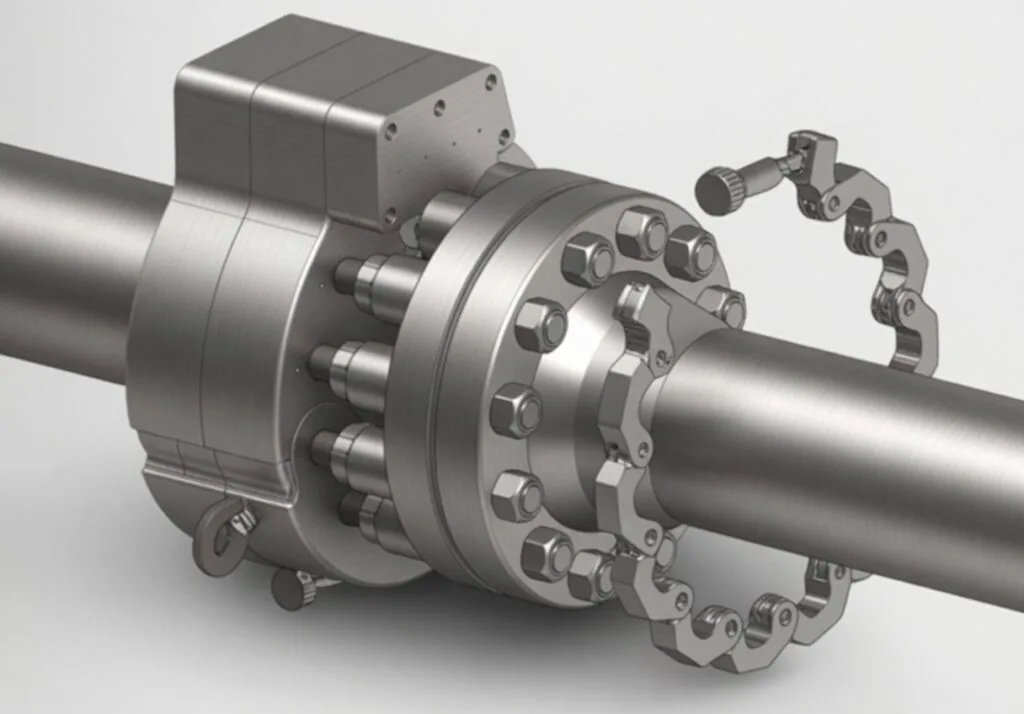
Demonstration
See MTE in motion.
The demonstration shows the system in horizontal, vertical and 45-degree positions.
Demonstration footage illustrates the mechanism; it is not a qualification test for every flange or service condition.
How the system works.
01 / Connect
Position the tightening heads on a compatible bolt pattern and connect the drive input.
02 / Distribute
Torque is automatically directed to the bolt with the least resistance. As its required turning torque rises, the system shifts torque to the next loosest bolt.
03 / Verify
Complete tightening and verify the joint against its approved assembly requirements and acceptance criteria.
Built for a defined joint
Bolt count, bolt-circle diameter, fastener size, access clearance and target torque determine the required system configuration. Compatibility should be checked before selection.
Evaluate the complete result
Tightening time and load consistency vary with the joint and procedure. Evaluate the proposed setup with application-specific testing rather than assuming a universal performance figure.
Bring us your flange challenge.
Send the flange drawing, bolt pattern, fastener grade, gasket details, target tightening requirement and available access. We can review the configuration and the next steps for a demonstration or technical evaluation.